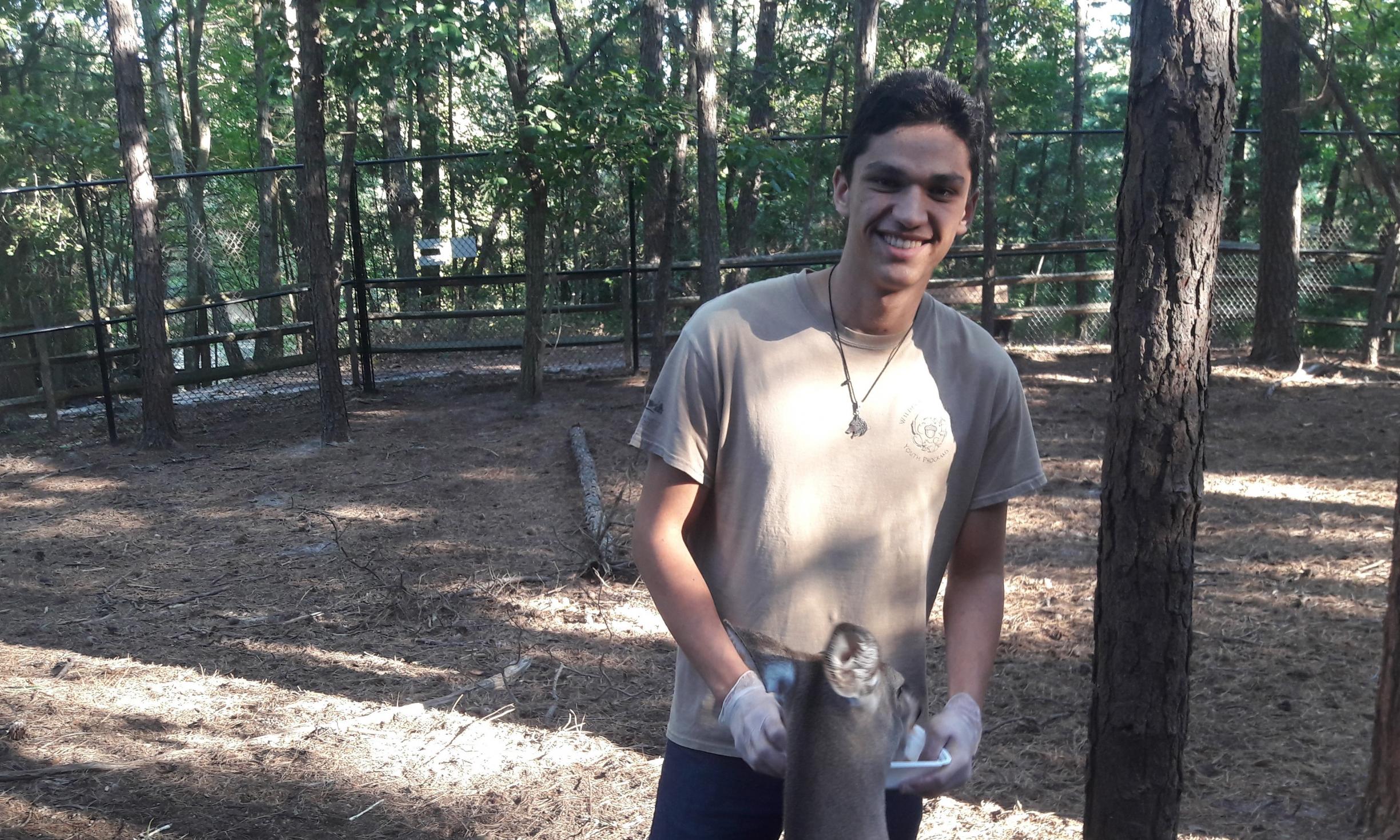
I began my journey with Wilderness Awareness School (WAS) by boarding a plane, alone for the first time, to track wolves in the Idaho backcountry. I was a freshman with a fascination for wolves and that first true wilderness experience was transformational. I went from liking nature to considering nature to be an essential part of me. After four years of WAS teen wolf tracking expeditions, I feel most at home in nature, trekking across clear mountain streams on misty mornings.
Before WAS I could be described as a bit nerdy. I studied hard back at home in New Jersey in order to ace the next exam, but after meeting my WAS instructor, Chris Smith, I gained a sense of direction. As a wildlife biologist, Chris offered me his knowledge and wisdom about starting a career in animal science, and now when I show up to an exam, I know why I’m there: to take the next step towards becoming a wildlife veterinarian.
And WAS didn’t just help me pursue my dreams, it provided me with a space to grow as a person. I met people from all over the country and world; in my first year, I befriended a student who came all the way from China! My instructors and fellow campers made me feel safe and comfortable on all fronts, from tracking wild animals to sharing thoughts and opinions. WAS helped to engender in me a passion, not just an interest, for my life and the things in it: a life now filled with family, wolves, and nature.
The inspirational peers, mentors, and environment I found at Wilderness Awareness School molded me throughout my high school years into a proud, confident, compassionate individual. Not only did the WAS community propel me towards my career goals, but it also enriched my life by acting as a second family and providing powerful memories and experiences.
Throughout my years at WAS, they did not fail to look out for me as my situation changed over the years. Not only was the Registrar extremely kind to me, but when in my last year with WAS I found myself without the ability to completely pay for my plane ticket and tuition, WAS was able to offer me a scholarship to continue their program. This was all thanks to the donors of Wilderness Awareness School who, with each donation, contribute to a child’s meaningful experience in the wild.